


Cheese Racks
Cheese racks are specialized pieces of equipment used in the aging, resting, and storage processes of cheese, and they directly affect the product’s quality and ability to breathe. Depending on the type of cheese and the facility’s hygiene standards, they are manufactured from three main materials:
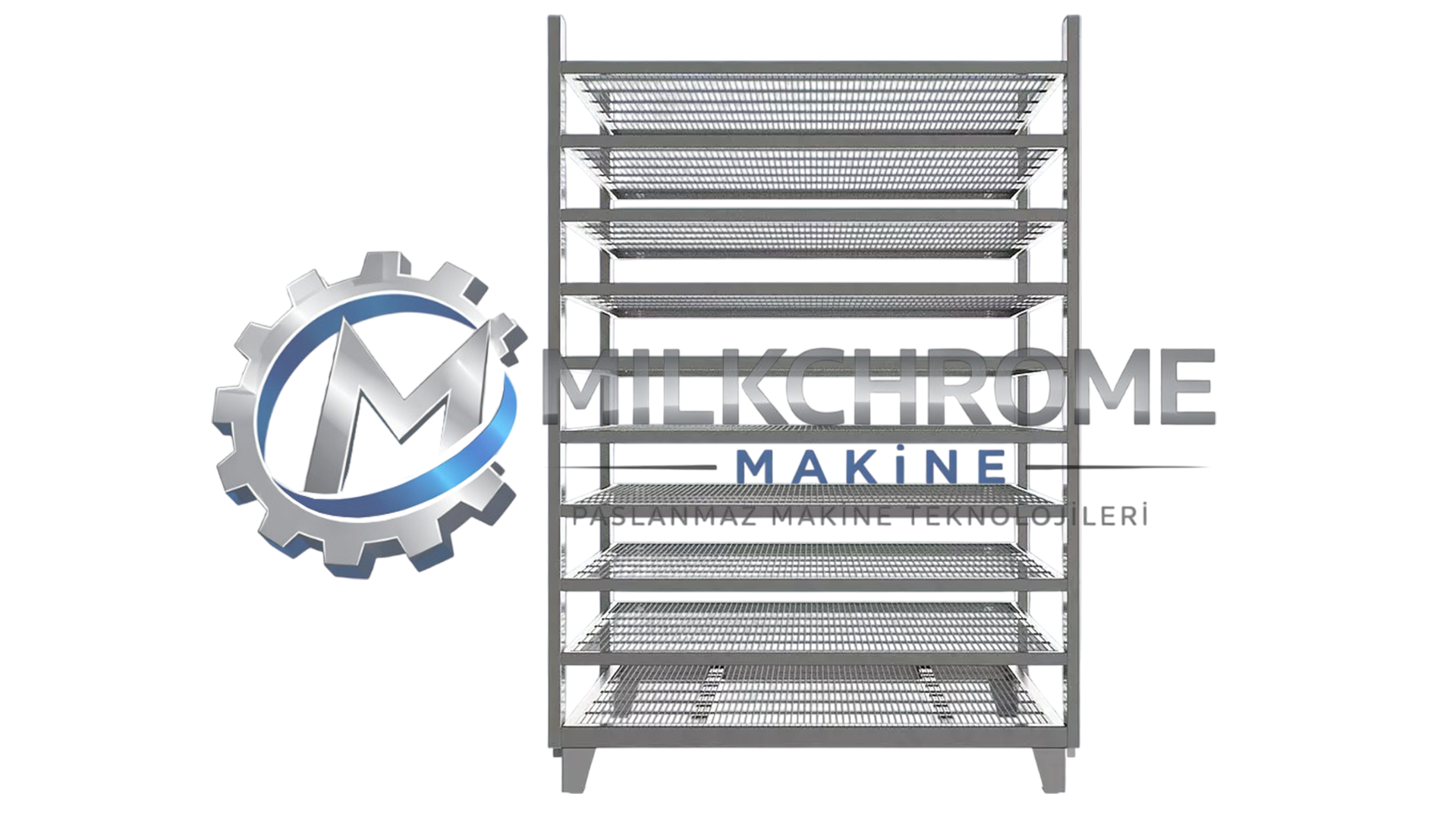
Stainless Steel Cheese Racks
This is the most commonly used type in industrial facilities.
Material: Typically manufactured from AISI 304 grade stainless steel.
Advantages: Extremely durable, corrosion-resistant, and fully compatible with CIP (cleaning) processes. It does not harbor bacteria.
Design: Typically features perforated sheet metal or wire mesh to facilitate air circulation.
2. Wooden Cheese Racks
Used in traditional and artisanal production, particularly for the aging of hard and semi-hard cheeses (such as Cheddar, Gruyère, and Parmesan).
Material: Resin-free and odorless wood species (such as spruce or oak) are typically preferred.
Advantage: Wood balances the humidity in the environment and provides a natural habitat for microorganisms that aid in rind formation.
Disadvantage: Cleaning is more difficult compared to stainless steel and requires regular maintenance.
3. Plastic (Food-Grade) Cheese Racks
They have become widespread in modern dairies due to their lightness and cost-effectiveness.
Material: Made from high-density polyethylene (HDPE) or polypropylene.
Advantage: There is no risk of rust, they are dishwasher-safe, and they feature special grid designs that optimize airflow.
Why Is It Important?
Air Circulation: The shelf’s design ensures airflow to the bottom of the cheese, preventing mold growth and moisture buildup.
Space Efficiency: Its multi-tiered structure maximizes space utilization in cold storage facilities.
Shape Preservation: It does not flex under the weight of cheese wheels, preventing the product’s shape from deforming.
This is the most commonly used type in industrial facilities.
Material: Typically manufactured from AISI 304 grade stainless steel.
Advantages: Extremely durable, corrosion-resistant, and fully compatible with CIP (cleaning) processes. It does not harbor bacteria.
Design: Typically features perforated sheet metal or wire mesh to facilitate air circulation.
2. Wooden Cheese Racks
Used in traditional and artisanal production, particularly for the aging of hard and semi-hard cheeses (such as Cheddar, Gruyère, and Parmesan).
Material: Resin-free and odorless wood species (such as spruce or oak) are typically preferred.
Advantage: Wood balances the humidity in the environment and provides a natural habitat for microorganisms that aid in rind formation.
Disadvantage: Cleaning is more difficult compared to stainless steel and requires regular maintenance.
3. Plastic (Food-Grade) Cheese Racks
They have become widespread in modern dairies due to their lightness and cost-effectiveness.
Material: Made from high-density polyethylene (HDPE) or polypropylene.
Advantage: There is no risk of rust, they are dishwasher-safe, and they feature special grid designs that optimize airflow.
Why Is It Important?
Air Circulation: The shelf’s design ensures airflow to the bottom of the cheese, preventing mold growth and moisture buildup.
Space Efficiency: Its multi-tiered structure maximizes space utilization in cold storage facilities.
Shape Preservation: It does not flex under the weight of cheese wheels, preventing the product’s shape from deforming.