


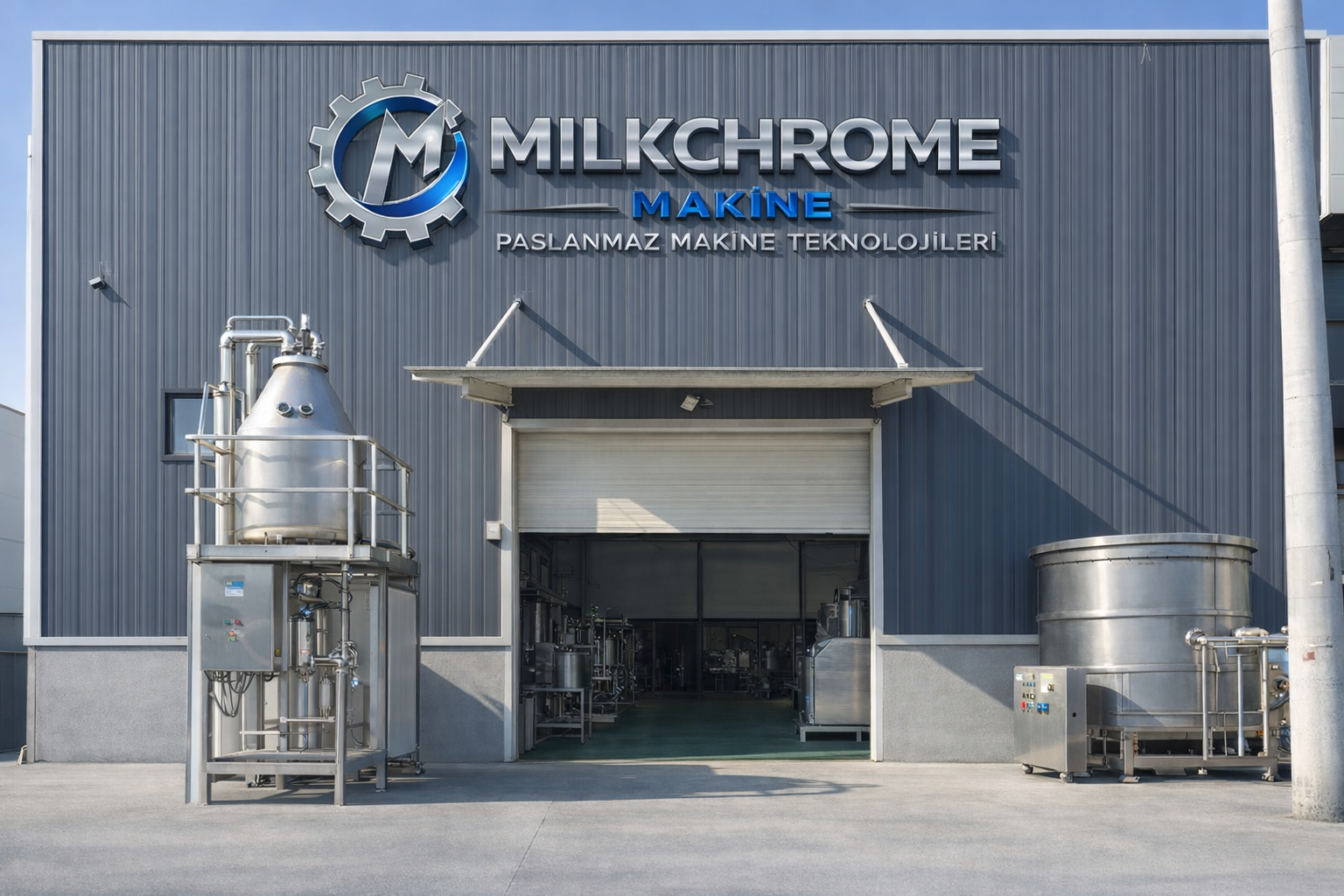
Process Tank
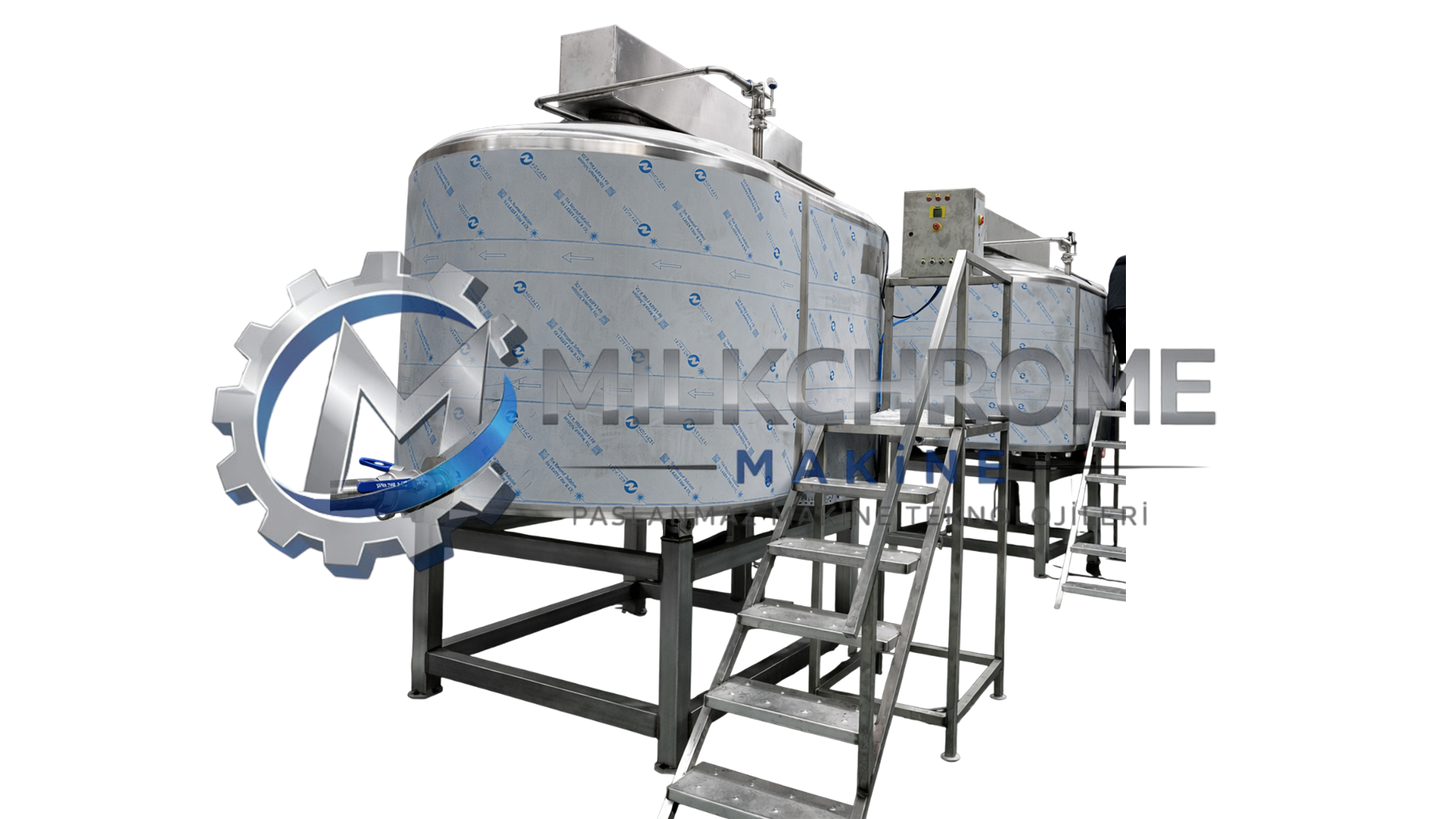
Process tanks are multi-purpose industrial vessels used in the food, chemical, pharmaceutical, and cosmetics industries to process products—such as heating, cooling, mixing, or holding them—according to a specific formula. In dairy plants, they are often referred to as "cooking kettles" or "mixing tanks." What distinguishes them from a standard storage tank is that they are equipped with components (such as heating jackets or mixers) designed to alter the product’s physical or chemical properties.
Key Features
Heating and Cooling Jacket: Thanks to special layers on the tank’s outer surface, the product inside is brought to the desired temperature through the circulation of hot water, steam, or cold water.
Mixer System: A propeller or scraper system used to prevent the product from settling at the bottom, distribute heat evenly, or mix different materials homogeneously.
Insulation: Mineral wool or polyurethane insulation is applied to the outer surface to retain heat inside the tank and save energy.
Material: Manufactured entirely from AISI 304 or AISI 316 grade stainless steel to meet hygiene standards.
Control Panel: The process is monitored in real-time via temperature sensors (PT100) and digital displays.
Common Applications in Dairy and Food Facilities
Milk Heating and Pasteurization: Heating raw milk to eliminate microorganisms.
Yogurt and Ayran Production: Bringing milk to fermentation temperature and the incubation process.
Fruit Juice and Sauce Production: Mixing and cooking ingredients.
Ice Cream Mix: Preparation of the ice cream mixture.
Factors to Consider When Making a Selection
Capacity: Production ranges from 100 liters to 10,000 liters depending on your needs.
Heating Type: It is important to determine whether your facility uses a steam system or electric heating elements.
Mixer Type: Depending on the product’s viscosity (flowability), you should choose either a high-speed motor or a low-speed scraper motor.
Heating and Cooling Jacket: Thanks to special layers on the tank’s outer surface, the product inside is brought to the desired temperature through the circulation of hot water, steam, or cold water.
Mixer System: A propeller or scraper system used to prevent the product from settling at the bottom, distribute heat evenly, or mix different materials homogeneously.
Insulation: Mineral wool or polyurethane insulation is applied to the outer surface to retain heat inside the tank and save energy.
Material: Manufactured entirely from AISI 304 or AISI 316 grade stainless steel to meet hygiene standards.
Control Panel: The process is monitored in real-time via temperature sensors (PT100) and digital displays.
Common Applications in Dairy and Food Facilities
Milk Heating and Pasteurization: Heating raw milk to eliminate microorganisms.
Yogurt and Ayran Production: Bringing milk to fermentation temperature and the incubation process.
Fruit Juice and Sauce Production: Mixing and cooking ingredients.
Ice Cream Mix: Preparation of the ice cream mixture.
Factors to Consider When Making a Selection
Capacity: Production ranges from 100 liters to 10,000 liters depending on your needs.
Heating Type: It is important to determine whether your facility uses a steam system or electric heating elements.
Mixer Type: Depending on the product’s viscosity (flowability), you should choose either a high-speed motor or a low-speed scraper motor.